Home / Single Versus Double Swing Gates
Single Versus Double Swing Gates
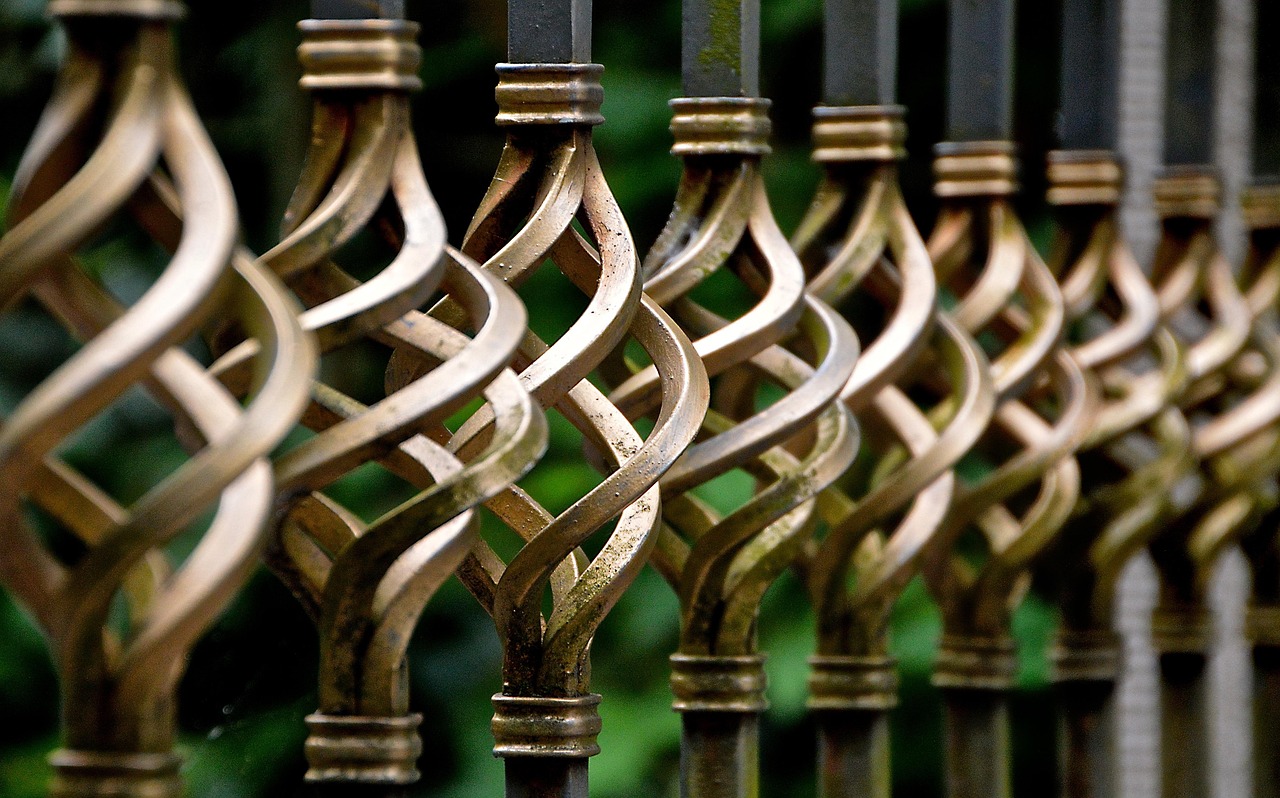
One leaf or two: the question behind the opening width
A homeowner who has settled on a swinging driveway gate still faces a layout choice: a single wide leaf hinged on one side, or a pair of leaves that meet in the middle. The answer is mostly arithmetic, driven by the opening width, the room available for the arc and how the gate will be used. Neither layout is better in general, but each has conditions where it is plainly the smarter pick.
What a single leaf asks of the property
A single leaf is one frame on one set of hinges. Its swing radius equals the full width of the opening, so a twelve foot opening needs twelve feet of clear arc. That arc must be free of parked cars, steps and shrubs, and the hinge post at the pivot has to carry the whole weight alone.
The strengths are simplicity and appearance. There is one latch, one operator, one set of hinges and one seam to line up. A solid design reads as a single clean panel, with no center joint breaking the pattern. Wiring for the operator is shorter, and the number of parts that can drift out of adjustment is small.
The weaknesses show up as the opening grows. A very wide leaf is heavy and acts as a long lever on its hinge post, which stresses the post and the footing. A wide single leaf also catches wind more than a narrow one, and it takes longer to open, since the far edge has a long way to travel. Beyond a certain width, builders usually recommend splitting the opening.
What a pair of leaves asks of the property
A double gate divides the opening into two leaves, each hinged at its own post and meeting at a center latch. Each leaf sweeps a radius of only half the opening, so tighter spaces work. The weight on each post is lower, and the leaves are lighter and easier to move, which makes the operators smaller or the manual effort lower.
The center seam is the main complication. The leaves must meet cleanly, usually with one leaf holding a drop rod or a slide bolt into the ground and the other closing against it. In an automatic pair, one leaf is called the primary and the other the secondary, and the primary begins moving a moment before the second so the overlap lines up. This delay is set on the control board and has to be adjusted carefully.
Two leaves also mean two operators in most automatic systems, which adds cost, wiring and maintenance. Some installations use a single operator linked to both leaves through a mechanical connection, but this is less common.
Practical thresholds
There is no universal cutoff, but patterns appear. Openings that are narrow, up to roughly the width of a one car driveway, often use a single leaf. Openings that fit two cars side by side almost always use a pair. The weight of the material also matters: a lightweight aluminum frame can span farther as a single leaf than a thick steel one.
Decorative considerations push the other way. Some designs, such as scrollwork that radiates from the center, look their best when two halves meet in a symmetrical pattern. In such cases, a pair is chosen for the look even when a single leaf could span the width.
Space and sequence in everyday use
Consider a household that drives out daily. With a single leaf, the whole gate has to swing before the car can pass, and the driver must wait. With a pair, the opening reaches usable width sooner, because each leaf only moves halfway. Some owners also program the gate to open only one leaf for pedestrians or small vehicles, saving time and wear.
When the drive is short and parking is close, a pair uses less space. A single leaf that opens inward may hit a parked vehicle; two narrow leaves might clear it. Conversely, if the property has a wide, open apron, a single leaf may be simpler.
Strength and sag
Hinge posts take the strain. In a single leaf, the one hinge post bears the entire gate weight plus any wind load. In a pair, two posts share the load, and each carries less. The center is supported by the other leaf or by the ground latch, which means the pair can span a wide opening without extreme post size.
All swing leaves tend to sag over time, dropping at the latch end as hinges wear. A leaf that is twice as long sags more. Diagonal braces, adjustable tension rods and quality hinges reduce the effect. A double gate is less prone to this because each leaf is shorter.
Operators and force
A single operator pushing a long leaf needs more force, particularly at the start of the swing, when the lever arm is largest. Operators for double gates push shorter leaves, so smaller units can be used. Still, two operators must be synchronized. If one is out of step, the leaves can collide at the center or leave a gap.
Control boards for double gates typically include a setting for the delay between leaves on opening and on closing. The closing delay is reversed from the opening one so the overlap lands correctly. A slight misadjustment shows up as leaves scraping each other or a seam that does not close tight.
Safety differences
A longer leaf moves faster at its tip, which can make impact forces higher unless the operator slows down near the end. Sensors must watch the full arc of each leaf. In a double gate, each leaf needs its own protection near the center seam, where fingers or objects can be caught between the leaves as they meet.
Both layouts need clear stop positions so the leaves cannot overswing into the street or into a wall. Rubber bumpers and posts, or adjustable stops built into the operator, are standard.
A quick decision guide
- Measure the opening. If it is wider than one vehicle plus a comfortable margin, lean toward a pair.
- Check the arc space. If a full width arc will not clear obstacles, choose two leaves.
- Think about the metal. Heavy materials favor pairs, light materials make a single leaf easier.
- Consider the design. Symmetrical patterns favor pairs.
- Count the operators and the budget for upkeep.
- Plan for wind. Narrower leaves resist wind better.
The best choice is the one that puts the least strain on the posts, fits in the space available and gives a smooth daily experience. When in doubt, a pair gives more flexibility, while a single leaf gives more simplicity.